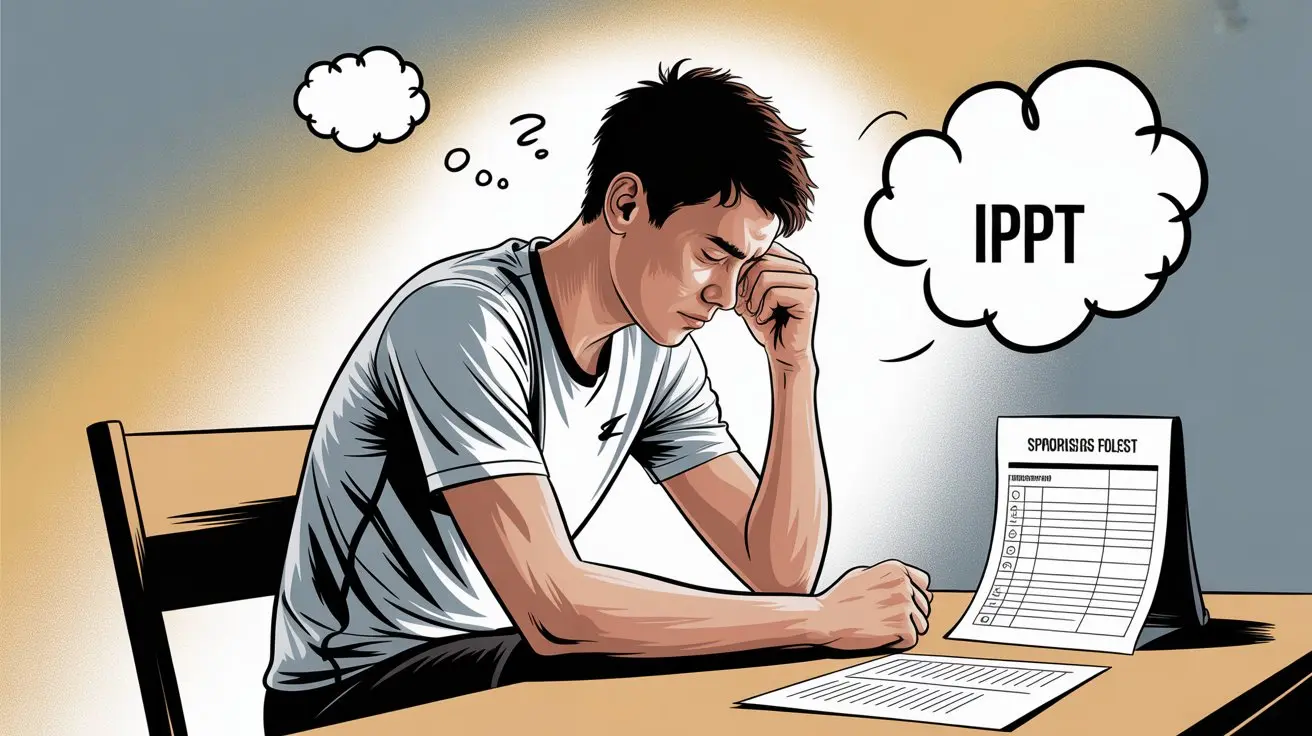
I still remember how heavy IPPT felt in my head long before I ever took the test. It was not the push ups or the run that scared me. It was the constant wondering about consequences. I kept asking myself what would happen if I did not pass and whether that meant I was already starting National Service on the wrong foot. The stress was quiet but constant, and it followed me even on days when I was not training.
If you’re worried about the consequences, the IPPT Fail Guide explains what actually happens next.
Life did not slow down just because IPPT was coming up. I had school, other responsibilities, and very limited mental space. Training felt inconsistent and progress felt slow. Every bad session made me feel like I was falling further behind. Looking back, most of that pressure did not come from the test itself. It came from not having clarity and letting rumours do the thinking for me.
Why IPPT stress feels so overwhelming at the start?
If you are feeling overwhelmed right now, there is a good chance the stress is not really about fitness. It usually comes from uncertainty. When you do not know what applies to you or what actually happens if things do not go perfectly, your mind fills in the gaps with worst case scenarios. That is exactly what happened to me.
I see this pattern again and again when people talk about IPPT online. Most are not afraid of effort or training. They are afraid of invisible outcomes they do not fully understand yet. Once that fear sets in, even small setbacks start to feel much bigger than they really are.
The first thing I got wrong was panicking before checking the basics
One of the biggest mistakes I made was worrying before confirming the basics. I assumed IPPT applied to me in a very specific way and that failing would automatically trigger serious consequences. I did not actually check whether those assumptions were true for my situation.
If you are stressed right now, the most calming first step is not more training. It is clarity. Before worrying about passing or failing, make sure you understand whether IPPT applies to you and in what context. There is a clear eligibility page on this site that explains who needs to take IPPT and when. Reading that early would have saved me a lot of unnecessary anxiety.

What I thought would happen if I failed?
In my head, failing IPPT felt like a disaster. I imagined extended training as punishment and thought it would label me as unfit from the very start. I worried that one failure would follow me throughout my entire time in National Service.
None of these fears were based on real experience. They came from stories, exaggerations, and bits of information taken out of context. When you do not have clarity, fear becomes very convincing and very loud.
For the real process and next steps, use the IPPT Fail Guide instead of relying on stories.
What actually happened and why it was not what I expected
The biggest surprise for me was realising that failing IPPT was not treated like a reprimand. It felt more like the system doing what it was meant to do, which is giving people more structure and more time to build up fitness properly.
From my own experience and from others I later spoke to, the reality was far less dramatic than the fear beforehand. The stress I carried before anything even happened was heavier than the experience itself.
About extended bMT and why it is often misunderstood
Extended BMT sounds intimidating and it is understandable why people fear it. But what most people imagine is very different from what it actually feels like. It is not about suffering more. It is about moving at a pace that allows your body to adapt.
Many people actually find it less overwhelming because there is less pressure to already be fit from day one. It does not define your National Service journey and it does not say anything about your character or effort. It is simply a different starting pace.
The moment things felt calmer was when I stopped guessing
The biggest shift for me happened when I stopped guessing where I stood. Instead of constantly asking myself whether I was far off or already doomed, I checked my actual position.
Using the IPPT calculator on this site helped me replace vague fear with something concrete. Not to judge myself, but to understand reality. That clarity alone reduced my stress more than any motivational talk ever did.
Why IPPT results often feel confusing at first?
Another thing that stressed me out was feeling like my results did not make sense. I thought doing well in one area should somehow balance out weakness in another. When that did not seem to happen, it felt unfair and discouraging.
Once I took the time to understand how IPPT scoring actually works, the confusion eased. If your result feels unexpected or frustrating, the scoring system page on this site explains it clearly and helps put things into perspective.
If you are busy, starting late, or feeling behind
A lot of people do not start from a strong fitness base. Some are coming off exams, long breaks, or years of inactivity. That is far more common than it feels when you are comparing yourself to others.
What matters most is not where you start. It is whether you let panic control your mindset. Slow and consistent effort beats stress driven decisions every single time.
What I wish someone had told me earlier
I wish someone had told me that most of the fear around IPPT is louder than the reality. One attempt does not define you. Systems exist to support improvement, not to punish people for struggling. Clarity removes more stress than motivation ever will.
Conclusion
If this whole IPPT thing is sitting in your head right now, I get it. Honestly, most of the stress came from overthinking. IPPT itself was not the problem. Once I stopped running ahead in my head and focused on what I actually needed to do next, it became manageable. You do not need to have everything sorted out yet. Just take the next step and deal with the rest later.