IPPT calculator
Calculate your IPPT(Individual Physical Proficiency Test) score for Singapore Armed Forces.
| Station | Your Performance | Points | Next Goal |
|---|---|---|---|
Push-Ups | 15 | +1 rep | |
Sit-Ups | 18 | +1 rep | |
2.4km Run | m s | 25 | -10 secs |
PASS WITH INCENTIVE
IPPT calculator score summary
Pass Mark
51 points
Stations
Push-ups, Sit-ups, 2.4km Run
Maximum Score
100 points
Zero-Score Rule
Zero in any station = Fail
Not sure what happens after a failed result? See our IPPT fail guide for the next steps.
How to use the IPPT calculator?
Follow these steps to estimate your IPPT score using the calculator above.
Enter your IPPT test details
Select age
Choose your age at the time of the IPPT attempt. This determines which scoring band is applied.
Select gender
Choose the applicable gender category. Separate scoring tables are used for different categories.
Enter push-ups
Enter the number of correct push-ups completed within the time limit.
Enter sit-ups
Enter the number of sit-ups completed within the allocated time.
Enter 2.4 km run time
Enter the completion time for the 2.4-kilometre run.
View estimated result
The calculator displays an estimated total score and the corresponding qualification or award level.
Your total IPPT score
The number shown is your estimated IPPT test score out of 100. It represents your combined performance across push-ups, sit-ups, and the 2.4-kilometre run.
This score places your result within the IPPT calculator scoring framework based on the age and gender category selected.
What the score qualifies for?
A total score of 51 points or higher meets the basic IPPT requirement. Higher score ranges correspond to Incentive Pass, Silver, or Gold, based on current thresholds.
Qualification is determined by the total score together with station-level requirements.
Understanding the Singapore IPPT scoring framework
What does the IPPT calculator assessment measure?
The Individual Physical Proficiency Test is a structured physical assessment used within Singapore’s national service system. It checks the basic fitness needs for service roles with three standard activities.
The assessment measures push-ups, sit-ups, and a 2.4-kilometre run. Each activity evaluates a different physical capacity rather than a combined or technical skill.
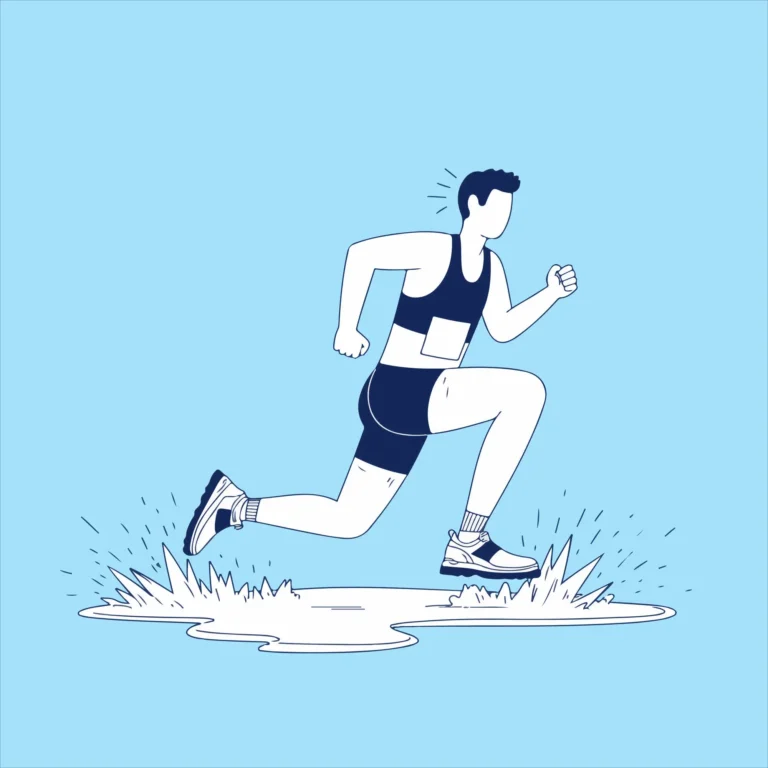
2.4 km run
The 2.4-kilometre run assesses cardiovascular endurance. Performance is measured by completion time rather than repetition count, with timing used to assign a specific score band.
In addition to individual station performance, the assessment considers valid repetition totals, recorded run time, cardiovascular capacity, and muscular endurance across repeated movement.
Performance in one station does not offset non-participation in another. Results reflect overall physical condition rather than strength or endurance in a single activity.
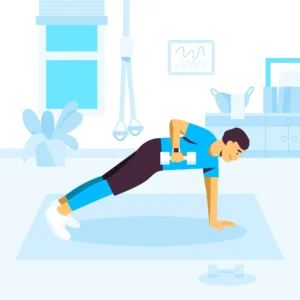
Push-ups
Push-ups assess upper-body strength and muscular endurance. Performance depends on executing the maximum number of repetitions correctly within a fixed time window. Only repetitions that meet form and movement standards are counted.
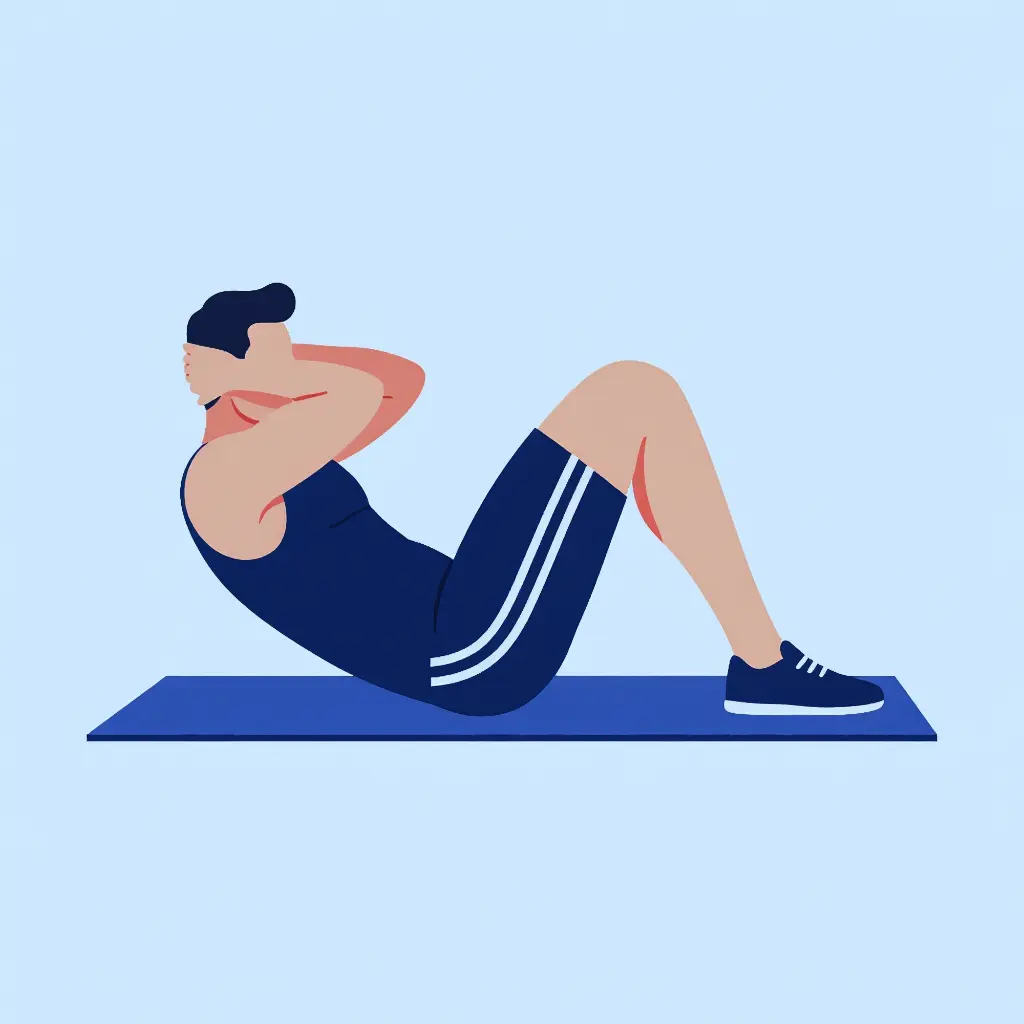
Sit-ups
Sit-ups assess abdominal strength and core endurance. Each repetition must meet the required form standard to be included in the final count.
How results are calculated?
IPPT Assessment results are expressed as a total score out of 100 points. Each station contributes a defined portion of the total score rather than carrying equal weight. Age category and gender category are applied during scoring. These categories adjust performance thresholds to reflect physiological differences across groups. The IPPT scoring system uses performance bands rather than linear scoring. Each band corresponds to a specific score range for each station.
Maximum points allocation is fixed across all categories, which are stated below:
Maximum points allocation
| Test component | Maximum points |
|---|---|
| 2.4 km run | 50 |
| Push-ups | 25 |
| Sit-ups | 25 |
| Total | 100 |
The combined score determines qualification status and award level, based on performance bands set for each age and gender category. These bands define how repetitions and run time convert into point values. A valid attempt requires participation in all three activities, with at least one point recorded in each station for the result to be recognised.
Worked examples
See how different performance levels translate to IPPT calculator scores and award tiers.
Pass with incentive
62
Points
Profile
26-year-old male
PUSH-UPS
42 reps
Sit-ups
45 reps
2.4 KM RUN
12:10
This score meets the Pass with Incentive threshold. It does not reach the Silver award level, which requires a higher total score.
Silver award
78
Points
Profile
26-year-old male
PUSH-UPS
50 reps
Sit-ups
48 reps
2.4 KM RUN
11:20
This score meets the Silver award threshold. It exceeds the Pass with Incentive level but does not reach the Gold award range.
Gold award
88
Points
Profile
26-year-old male
PUSH-UPS
60 reps
Sit-ups
55 reps
2.4 KM RUN
10:30
This score meets the Gold award threshold. It represents the highest recognition level under the IPPT scoring framework, subject to minimum station requirements being met.
Ready to hit these numbers? Our IPPT preparation guide breaks down the exact 4–12 week training structure needed to move from a Pass to Gold.
NS IPPT categories and eligibility
Performance in one station cannot replace participation in another. Results reflect overall physical condition rather than isolated ability.
NSmen fitness requirements
NSmen are required to complete the assessment as part of their annual service obligation. This requirement applies across service years and supports physical readiness.
Each NSman is assigned an eligibility window. The assessment must be completed within this period to meet annual requirements.
Key points for NSmen include:
-
Annual completion requirement
-
Assigned assessment window
-
Eligibility based on service status
Failure to meet requirements within the window may trigger additional follow-up actions based on current service policies. The obligation applies regardless of vocation, with scoring adjustments handled through age and gender categories.NSmen who complete the assessment early remain compliant until the next eligibility cycle begins.
-
NSF and full-time service categories
NSFs complete the assessment during their full-time service period. The assessment acts as a fitness benchmark rather than a standalone evaluation. The test structure remains the same, though requirements are applied within training and service stages.
For NSFs:
-
Assessment occurs during active service
-
Qualification outcomes align with training standards
-
Recognition rules may differ from NSmen
Scoring rules remain identical across service categories.
-
Pre-Enlistee and BMT candidates
Pre-enlistees can also use our /bmi-calculator/ to check whether BMI may affect PES-related enlistment readiness and training placement.
This assessment is linked to:
-
Fitness benchmarks before enlistment
-
Eligibility for training adjustments
-
Alignment with Basic Military Training standards
-
PES category IPPT requirement Training impact PES A Required Training reduction possible PES B1 Required Training reduction possible Other PES Not required No reduction PES A and PES B1 candidates are eligible for IPPT-based training adjustments. Other PES categories are not required to meet IPPT benchmarks.
Training reduction conditions are applied only when formal assessment results meet defined thresholds. Results are time-sensitive and must meet submission requirements within the defined pre-enlistment period.
Not sure if IPPT applies to you? Check your IPPT Eligibility to understand who needs to take IPPT and when.
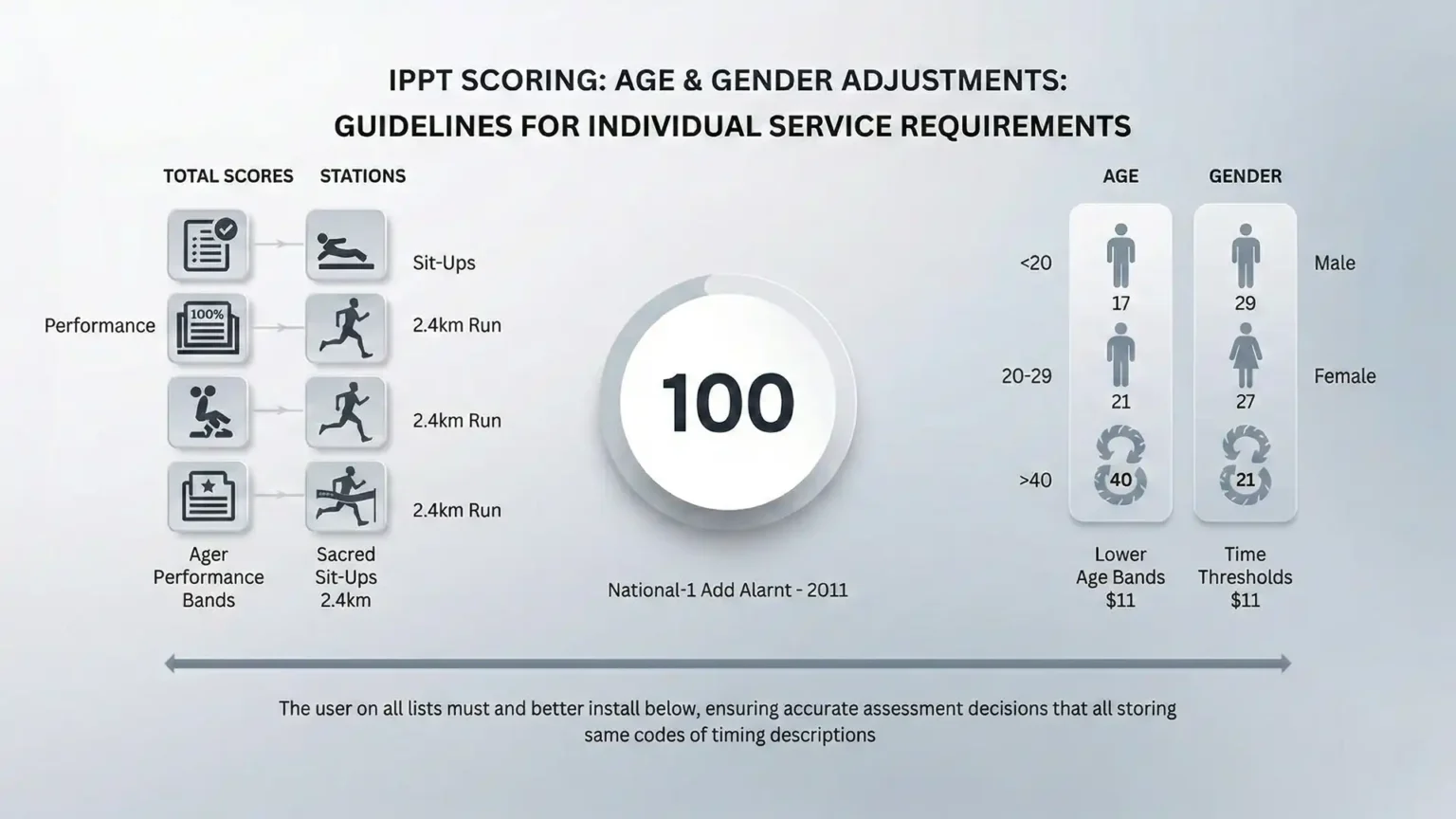
Age and gender scoring differences
IPPT calculator test uses defined age groups to apply adjusted scoring thresholds. Each age band reflects expected physiological changes over time. Older age groups require fewer repetitions or slower run timings to achieve the same score as younger groups. This adjustment maintains consistent assessment intent.
Age-based performance bands
Performance standards are organised into defined age groups. Each age group uses adjusted scoring thresholds to assign points, while the test activities and scoring structure remain the same.
| Factor | What it means |
|---|---|
| Age grouping | Participants are assessed within fixed age ranges rather than across all ages |
| Threshold adjustment | Score requirements change by age, but the scoring system remains the same |
| Test activities | Push-ups, sit-ups, and the 2.4 km run are used for every age group |
| Assessment structure | Station format and point allocation stay the same across all ages |
Scoring conversion adjusts for age and gender categories. Test activities remain identical for all candidates.
Gender-based scoring standards
Separate scoring tables are used for male and female categories. These tables account for physiological differences without altering assessment structure. Male category scoring uses one set of repetition and timing thresholds. Female category scoring uses a separate set of thresholds. Station structure remains identical across genders. Only the scoring conversion tables differ. IPPT calculator results are interpreted within the assigned gender category rather than across categories.
| Aspect | Male category | Female category |
|---|---|---|
| Test activities | Same | Same |
| Scoring tables | Male-specific | Female-specific |
| Total score | 100 | 100 |
Result levels and recognition
This section explains how results are classified and what different score ranges represent.
Qualification status explained
Qualification outcomes include:
-
Pass
-
Incentive pass
-
Fail
Qualification status is determined by total score and station-level rules. A pass requires meeting the minimum score threshold and station requirements. Fail status applies when minimum conditions are not met, even if the total score appears high. Incentive pass criteria apply to higher score bands that qualify for recognition awards.
A universal rule applies to all candidates:
Condition Outcome Pass threshold met Pass Incentive threshold met Incentive Pass Zero points in any station Fail -
Award levels and recognition
IPPT includes recognition tiers based on total score bands. These tiers include Gold and Silver awards.
Each award level represents a defined level of physical readiness rather than competitive ranking. Cash incentive tiers correspond to award levels and service category eligibility. Incentives recognise sustained fitness standards rather than single-station performance.
Award level Recognition Gold Highest performance level Silver Intermediate performance Incentive pass Monetary incentive tier Pass Requirement fulfilled To understand how these results fit into your yearly obligations, see the IPPT window and annual requirements guide.
IPPT test formats and stations
The assessment format has evolved over time. This section outlines the current structure.
3-station format
The current assessment uses a three-station format:
-
Push-ups
-
Sit-ups
-
2.4 km run
Stations:
Three
Skill dependency:
None
Current usage:
Active
-
5-station format
Earlier formats included additional stations that tested skill-based activities. These stations were removed in later revisions.
Stations:
Three
Skill dependency:
Present
Current usage:
Historical
Special conditions and adjustments
Some candidates may qualify for adjustments under specific circumstances.
Exemptions and special cases
Medical exemptions may apply in specific circumstances. Temporary adjustments may be granted when supported by documentation.
Exemptions affect eligibility requirements but do not change scoring rules for completed activities.
Enhanced and new scoring systems
Scoring systems have been updated over time. Enhanced formats adjust point distribution while retaining the same activities.
Updates apply across eligible service categories.
Official bodies and administration
The assessment operates within established service frameworks.
Role of singapore armed forces and mindef
Assessment standards operate within frameworks associated with these bodies. They define policy alignment and governance.
Central manpower base and service administration
CMPB manages enlistment processes and assessment coordination. Scheduling and eligibility tracking follow established service systems.
Frequently asked questions
How to use your result effectively
This section explains how results can be interpreted after completion.
Improving performance over time
-
Performance progression depends on consistent training rather than single assessments.
-
Recovery periods support sustainable endurance and strength development.
-
Nutrition basics support training output without requiring specialised plans.
-
Hydration supports endurance testing accuracy.
-
Light meals before endurance testing reduce discomfort during running segments.
-
Understanding what your score means
-
Results indicate the current readiness level rather than long-term capability.
-
Scores show proximity to the next award band.
-
Identifying the weakest station supports targeted training focus.
-
Targeted improvement planning focuses on specific stations rather than overall volume.
-
About this IPPT scoring information
This section explains how information on this page is prepared and maintained.
How this information is compiled?
Information is compiled from publicly available service standards and assessment frameworks. Content aligns with current scoring formats used during formal testing. No unpublished criteria are referenced.
Accuracy and limitations
All explanations represent estimates and interpretations. Formal testing determines actual results and qualification status. This content provides guidance rather than official determination.
Who this page is for?
-
NSmen seeking score interpretation.
-
NSF reviewing training benchmarks.
-
Pre-enlistees assessing readiness.
-
Assessment candidates reviewing qualification structure.
-
Content review and updates
-
Content undergoes periodic review.
-
Scoring changes are reflected when publicly announced.
-
Outdated formats are removed during review cycles.
-
Last Updated: May 25, 2026 Based on publicly available MINDEF and CMPB scoring frameworks.