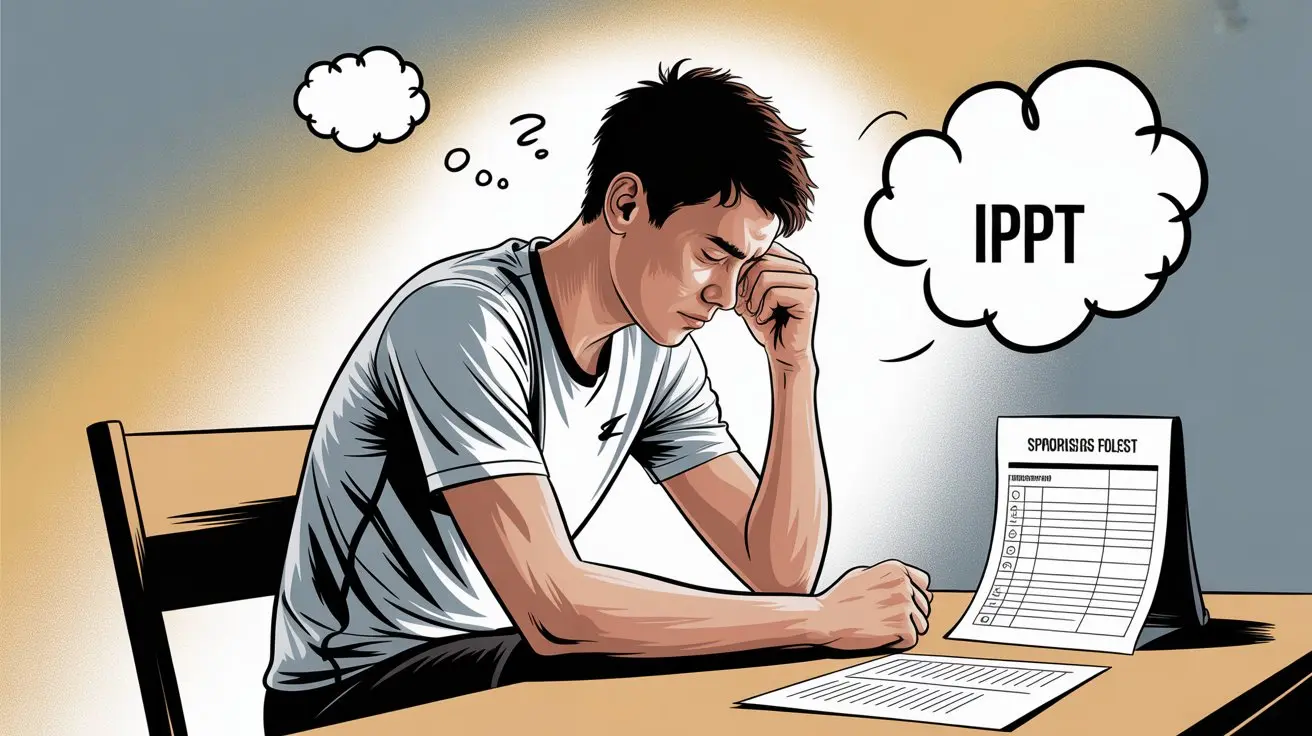
The 2.4 km IPPT run feels tough because the mind reacts before the body does. Many people slow down not because their legs are gone, but because the halfway point triggers panic and doubt. When breathing gets heavy, the brain treats it like danger even though the body can still go. Breaking the run into small targets helps you stay steady and finish strong.
If you’re unsure how your 2.4km timing converts to points, check the IPPT Scoring System to see exactly how the run is graded.
If you’ve run 2.4 km for IPPT, you know that moment when the run starts fine and then suddenly doesn’t. Your legs might be okay, but your mind tells you to slow down. This part is the real fight. The test looks physical, but inside your head, it’s something else.
Most guides talk about pacing and timing, but very few explain why the 2.4 km run feels mentally overwhelming. This article breaks down the psychological side of the test so you understand what your mind is doing and how to manage it.

Why Does the 2.4 KM IPPT Run Feel So Mentally Hard?
The mind notices discomfort faster than your body settles into pace. Heavy breathing, warm legs, and rising effort make the mind react as if something is wrong. The body can usually continue without problems, but the mind makes the work feel bigger than it is. One reason this happens is the body enters its normal aerobic-transition phase, but the mind misreads this shift as a warning sign.
What Happens at the Halfway Point of the 2.4 Km Run?
Around the 1.2 km mark, your thoughts get louder. You start counting laps, checking your breathing, and doubting your pace. Many people give up here, not because their legs fail, but because the mind treats normal discomfort like danger. The body is still fine. Many NSmen report that the 1.2 km point feels like the hardest part, even though their physical fatigue is not at its peak.
How Can You Break the 2.4 Km Into Smaller Targets?
Thinking about the full 2.4 km makes the run feel long. It’s easier to focus on smaller targets—one lap, one bend, one pole, one straight stretch. Small goals keep your mind calm and stop the fear of “how far left.”
This also keeps your lap splits more stable, which reduces the mental pressure that usually comes from early pace swings. Once your mind starts reacting to discomfort, the next step is controlling the thoughts that appear.
What Should You Tell Yourself When You Feel Like Stopping?
Self-talk can save your timing.
“I’m dying” → “This is normal.”
“I’m slow” → “I’m still moving.”
“I can’t” → “One more lap.”
Simple lines like these help your breathing settle and stop your thoughts from spiralling. A small pacing change can mean a big jump in points—use the IPPT Scoring System to compare what different timings are worth.
Why Is Your Body Stronger Than Your Thoughts During the Run?
Many people expect a Silver or Gold result until test day surprises them. Others panic when breathing rises early. But the body is usually fine—the mind is the one that overreacts. Fitness comes from consistency and learning to stay calm when things feel hard.
What’s the Difference Between Mind vs Body in the 2.4 Km?
Many runners stop because of what they think, not because their body reaches its limit.
| What You Feel | What’s Actually Happening |
|---|---|
| Heavy breathing | Your body is adjusting |
| Burning legs | Your muscles are working |
| Strong urge to stop | Your mind reacting |
| Panic halfway | Mental fatigue, not physical limits |
These reactions are normal for aerobic running, and none of them mean you are close to your physical limit.
How Should You Warm Up Mentally Before the Run?
- Take slow breaths for half a minute.
- Picture yourself finishing without stopping.
- Expect discomfort so it doesn’t shock you later.
- This quiet reset helps your mind accept the effort.
Doing the same mental routine before every practice run builds familiarity, which reduces pre-run anxiety on test day.
What Quick Checks Should You Do Before Starting Your Run?
- Discomfort is normal
- One lap at a time
- Keep breathing steady
- Expect the halfway struggle
- Finish even if you slow down
These checks prevent early panic and help you stay focused during the first two laps, which are usually the easiest places to lose control.
What Mental Traps Make the 2.4 Km Feel Harder?
| Mental Trap | What It Feels Like | Better Response |
|---|---|---|
| Panic halfway | “Still so far” | “One lap only” |
| Comparing others | “Everyone is faster” | “Run your own pace” |
| Fear of failing | “What if I don’t pass?” | “Finish first” |
How Do You Train Your Mind for a Better 2.4 Km Timing?
You don’t need to sprint. You need to stay calm when things feel uncomfortable. With practice, that feeling stops feeling like an emergency. On test day, nothing feels new—not the distance, not the breathing, not the pace. It becomes something you’ve already handled before.
Mini 2.4 Km Pacing Guide (Simple & Safe)
Your pacing will only work if your mind stays steady. Once your breathing or discomfort triggers panic, even a perfect pacing plan falls apart.
Lap 1: Stay relaxed
Laps 2–4: Hold a steady rhythm
Lap 5: Expect discomfort, stay calm
Lap 6: Shorter strides, finish strong
This pattern works because it aligns with how most runners naturally fatigue while keeping the mental load manageable.
FAQ: Common Questions Runners Ask Before IPPT
Six laps on a 400 m track.
Yes. The mind reacts before the body breaks.
It depends on age. Use the IPPT score calculator to see your exact target.
Most runners pass with steady pacing, not sprints. Each lap should stay close to your target split.
Check Your Timing Before IPPT Day
If you want to know the timing needed for your score, use the IPPT score calculator. It shows the exact timing you need for your age group. You can also check how the run, push-ups, and sit-ups affect your final score. Once you’ve locked in your mental plan, confirm your target timing with the IPPT Scoring System so you know exactly what you’re chasing.
Want to turn today’s run into a real score? Use the calculator to see where you stand.
Author Note (Experience-Based)
This article is based on real training experiences from people preparing for IPPT. It is meant to guide, explain, and help runners understand the mental side of the test.
The observations here are based on repeated test-day behaviour patterns seen across regular runners, casual trainees, and NSmen of different age groups. For a full plan, follow the IPPT preparation guide, and if the run is your weak point, see how to ace your IPPT.