NS FIT & Remedial Training (RT): What Happens If You Fail IPPT?
When an IPPT score falls short of the passing mark, the result is added to the NSman’s record. This change triggers the next year’s fitness steps. Many NSmen get confused about whether they will need RT, NS FIT, or both, and what the “10 sessions” actually mean.
By 2026, most NSmen will be assigned NS FIT. RT still appears in some branches, but far less than before. This page explains how the system records a fail, how NS FIT works today, when RT appears, and what you should do to avoid problems during the next cycle.
Quick Summary
Post-fail Path
An IPPT fail moves the NSman into a fitness path for the next cycle.
NS FIT
The path uses NS FIT as the main system for corrective training today.
RT Limited
RT is still used in some groups, but NS FIT handles most post-fail needs.
Fail vs No-show
A fail and a no-attempt are different events in the system.
Overdue Risk
Missing assigned sessions may lead to overdue status or follow-up checks.
Fitness Build
Training supports strength, movement skills and endurance for the next attempt.
Medical Clearance
Medical issues must be cleared before joining sessions.
Flexible Training
The current structure uses NS FIT to give NSmen more flexible training options.
Use the Ippt calculator to estimate your current score before planning your next step.
What happens when an nsman fails IPPT?
A fail updates the record for the current training year. Under the current rules, the next cycle usually requires 10 NS FIT sessions plus one IPPT attempt. This is the standard setup for most NSmen because NS FIT has taken over as the main route.
A fail and a no-attempt are not the same:
Fail
You turned up and tried but didn’t reach the passing total.
No-attempt
You didn’t book or didn’t show up before the cycle closed.
If you want to understand how points and pass marks are calculated, read the Ippt scoring system guide.
Both affect the next cycle, but the system treats them differently. No-attempt cases often draw more attention because they involve a missed duty rather than a low score. Once the result appears in the NS Portal, the next cycle’s requirement is created automatically.
To understand how your fail affects your current IPPT cycle and window deadlines, see the full IPPT Window & Annual Requirements Guide.
How the IPPT → RT → NS FIT Pathway Functions?
Since 2021, and still in place for 2026, NS FIT is the main way to clear fitness steps after a fail. When a fail or no-attempt is recorded, the next cycle requires:
10 NS FIT sessions
One IPPT attempt inside those sessions
RT appears only in specific service branches or legacy structures. For the majority of NSmen, NS FIT is assigned right away for the new cycle. The system reviews age group, health notes, past records, and service requirements before confirming the route.
Step-By-Step Process After a Failure
When a fail is entered, the system updates your record and starts planning your next steps. It checks your age band, medical notes, time left in the cycle, and service rules. Most NSmen will see NS FIT when the next cycle starts. Keeping up with the timeline prevents overdue status.
Updating the Result
The fail enters your record right away. This information sets the requirement for the next training year. The fail is not treated as misconduct – it simply signals that fitness work is needed.
Assigning NS FIT (Main Route)
Most NSmen will get NS FIT for the following year. RT is only used in certain branches or when an NSman is under a unit that still follows an older setup. These cases are not common anymore.
Cycle Timelines
The next training year becomes the active period to finish the 10 NS FIT sessions and the IPPT attempt. The window is fixed, so planning matters. NS FIT offers many timings and venues, making it easier to fit around work.
If the Timeline Is Missed
If the sessions are not completed within the year, the person goes into overdue status. Overdue cases may receive checks or follow-ups. Repeated overdue behavior can lead to more serious steps.
Before booking NS FIT or planning a retest, use the IPPT calculator to see how far you are from passing.
How NS FIT Reduces the Load of RT?
NS FIT was brought in to replace long RT cycles that were hard to manage for working adults. Sessions are shorter, spread across many locations, and easier to schedule. NSmen need 10 sessions in the new cycle, and in many cases, passing IPPT during an NS FIT session ends the requirement early through a score-out route.
The change to NS FIT happened to reduce time spent in camps and make training more practical for NSmen with busy routines.
IPPT Failure as a System Category
A fail is simply a record showing that the score was below the passing line. It triggers fitness steps but is not a punishment. The system uses this result to decide the next cycle’s tasks and keep the training outline consistent for everyone.
Scoring Logic
IPPT totals come from push-ups, sit-ups, and a 2.4 km run. Points vary by age. Falling below the passing score leads to a fail, and the system logs it right away.
Status and Recording
Each attempt is saved in the fitness record. The system uses this history to assign training or confirm passes for the year.
Common Confusion
A fail does not mean you are unfit for NS duties. It simply adds a fitness task for the next cycle. Many NSmen see quick progress once they attend regular sessions.
Remedial Training (RT)
RT is another way the system helps NSmen work on fitness. It takes place in camps and runs on fixed timings. Attendance is strict. Even though RT still exists, most NSmen today will not get RT unless their service branch still uses it.
Purpose
RT is meant to rebuild strength and stamina over time. It follows a set routine and has fixed meeting times.
Session Structure
Sessions usually include warm-ups, controlled strength work, and running. The load grows slowly so the body adapts safely.
Attendance Rules
RT has tight attendance rules. Missing a session without approval affects your record and may trigger checks.
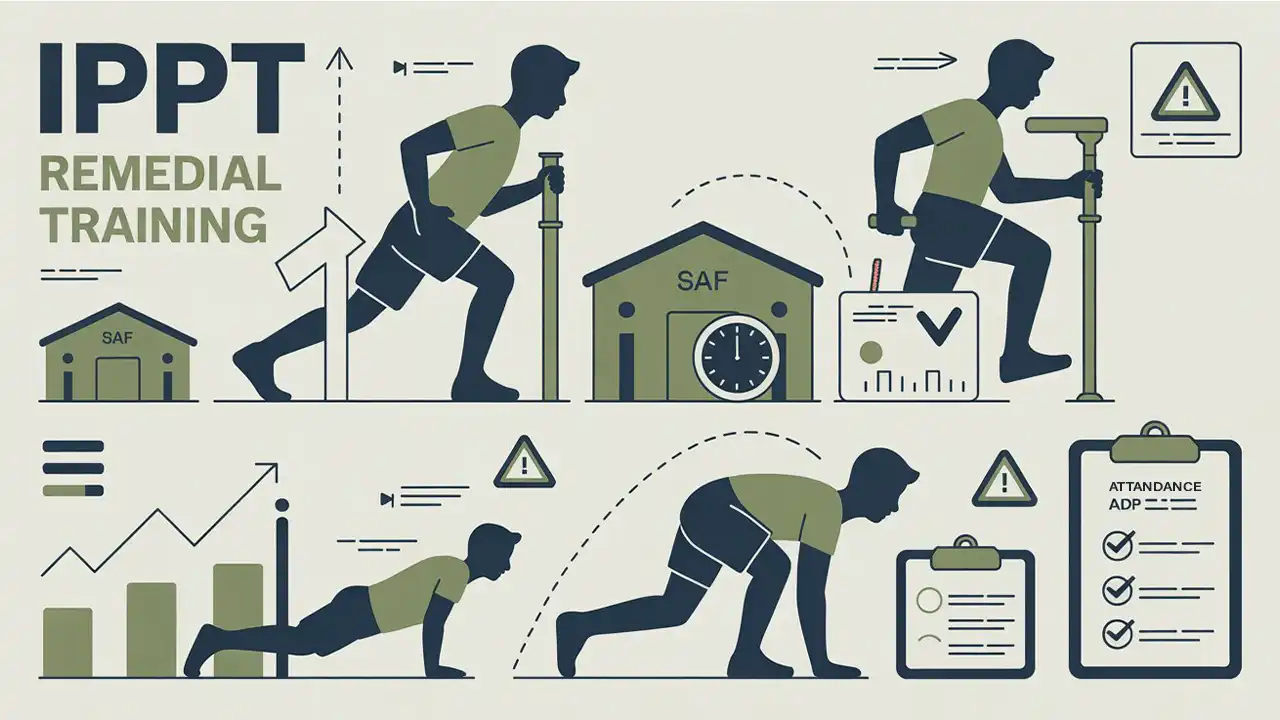
NS FIT as a Flexible Alternative
NS FIT is now the main path for post-fail training. It replaces RT for most NSmen. It runs at many venues, has more timing options, and can be finished faster. Once the NS Portal assigns NS FIT, completing the required sessions clears the cycle.
Rationale
NS FIT was designed for adults who have jobs and families. The shorter sessions and varied locations make it easier to keep up with training.
Training Types
NS FIT sessions cover strength, conditioning, and running work. Each session targets one part of IPPT performance. Most sessions last around 60 to 75 minutes.
Outcomes
Finishing the 10 NS FIT sessions completes the requirement for the year. Many NSmen finish within a few weeks once they plan ahead.
NS FIT vs RT
RT runs on fixed times in camps. NS FIT runs in many locations with far more timing choices.
| Feature | RT | NS FIT |
|---|---|---|
| Objective | Correct fitness after fail | Improve fitness with flexible sessions |
| Format | Fixed timings in camps | Many venues + flexible slots |
| Session Count | Usually higher | Ten sessions when assigned |
| End Result | Meets requirement | Meets requirement |
Both aim to help the NSman prepare for the next IPPT attempt.
Failing IPPT vs Not Attempting
A fail and a no-attempt are treated differently by the system.
-
Status Difference
- Fail: Attempt made but score below pass.
- No-attempt: No booking or did not show up.
Training Duties
A fail triggers NS FIT or RT depending on assignment. A no-attempt may lead to stricter follow-up.
Real Cases
Many NSmen who fail pass after NS FIT. No-attempt cases often face more checks.
If you’re unsure whether IPPT applies to you in the first place, check IPPT eligibility before worrying about consequences.
What To Do Immediately After a Failure?
Once the result is in, the NSman should check the NS Portal, see which route was assigned, and book early. Booking early avoids last-minute rush and makes it easier to stay on track.
Check Status
Open the NS Portal and check whether NS FIT or RT was assigned.
Book Early
Slots can fill up during busy periods. Booking early keeps things simple.
Finish Early
Completing sessions early removes pressure later in the cycle.
Start by checking your numbers using the IPPT calculator, then decide whether NS FIT or a retest is your best route.
Clearing RT Through NS FIT
In some cases, NS FIT can replace RT fully. If the system assigns NS FIT as an accepted route, you can clear the cycle by either finishing NS FIT sessions or passing a later IPPT attempt.
Two Ways to Clear
- Score-out: Passing IPPT during or after sessions.
- Attendance-out: Completing all 10 NS FIT sessions.
When It Counts
The NS Portal will show if NS FIT counts for your case.
Planning
A steady schedule lets most NSmen clear NS FIT quickly.
Improving for the Next IPPT Attempt
Improving for the next attempt works best when physical training and mental habits build together. Small, steady gains in strength, core control and running pace help many NSmen improve. Managing stress and staying calm during the run also makes a big difference.
Push-Ups
Controlled reps build strength in the upper body.
Sit-Ups
Simple core work improves staying power.
The 2.4 km Run
Regular moderate runs improve pace and breathing.
Recovery
Good sleep, hydration and rest improve training results.
To understand how mindset affects pacing, you can read our guide on the mental battle during a 2.4 km run
RT/NS FIT: Key Notes for NSmen
f You Skip RT or NS FIT
Missing assigned sessions may lead to overdue status. Repeated absence can lead to follow-up steps under service rules.
Health and Injury Checks
Both RT and NS FIT use controlled workloads. Anyone with injuries or health concerns should get clearance first. The system allows deferment when needed so you don’t worsen any condition.
How the system evolved?
lder cycles relied heavily on RT, which was hard for many working adults. Over time, the setup changed so more people could keep up. NS FIT became the main path because it fits better with real-life schedules and has lifted overall participation.
Misunderstandings About NS FIT and IPPT Failure
Some NSmen think NS FIT is optional after a fail, but the NS Portal decides the route. Others think RT must come first, which is no longer true for most cases. There is also a belief that attending NS FIT or RT guarantees a pass, but the final score still depends on individual effort.
Questions NSmen Often Ask
These answers reflect publicly available guidance. Outcomes depend on official records.
“How far am I from passing?” You can check your score and see how close you are to a pass using our IPPT calculator.
Sources and Accuracy Note
This page follows details shared through official Singapore NS platforms. Rules may change, and final outcomes depend on updated records in the service systems.