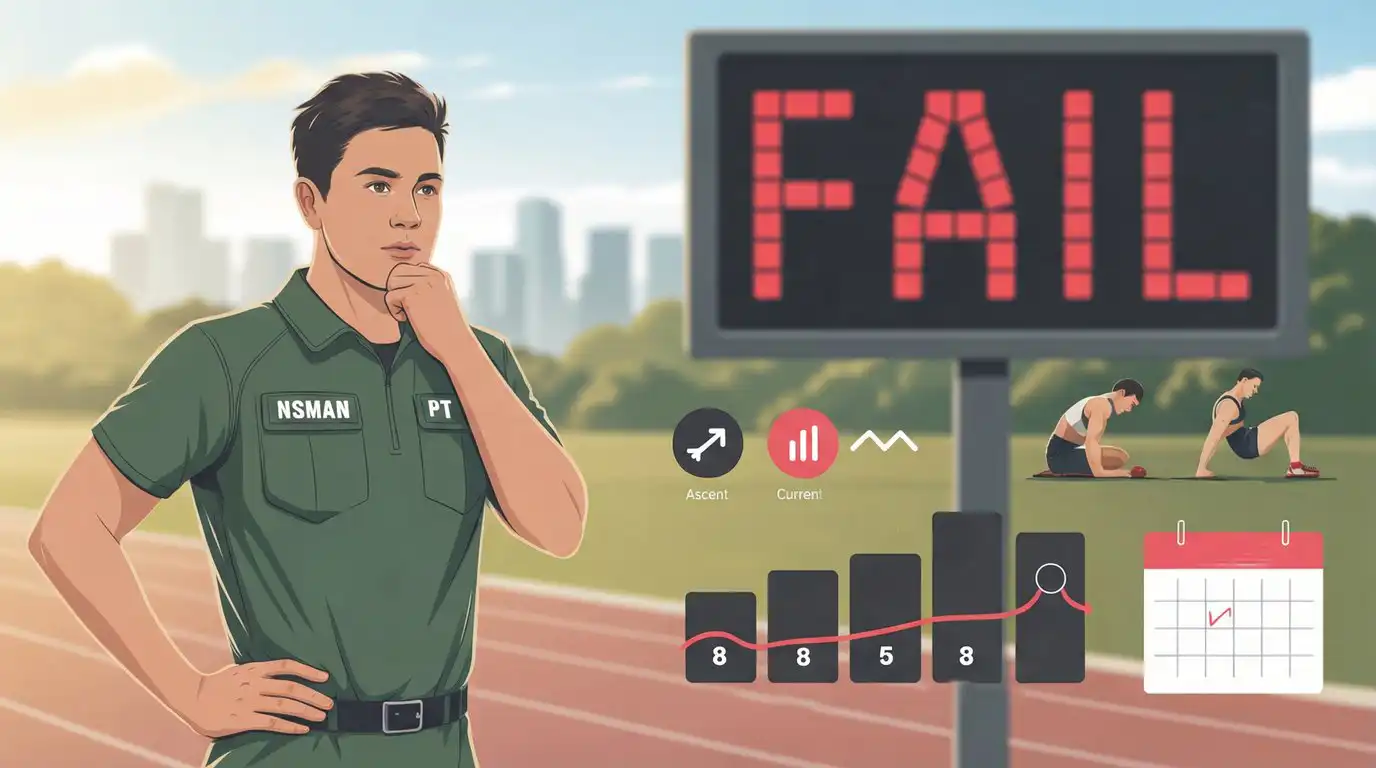
When the system shows ‘Fail’ on your IPPT results, it stings especially when you know you were just a few reps short.. You walk off the track tired, maybe embarrassed, doing the mental math of how many points you missed. For many NSmen, it’s not just about fitness, it’s about pride, time, and not wanting to spend extra evenings at NS FIT.
I’ve been there. I missed my passing score by just 3 points because I underestimated the 2.4km run and only started training two weeks before my test. That failure wasn’t about talent, it was about poor planning. The good news? If you fix pacing, planning, and consistency, your next attempt can look very different.
What Happens After You Fail IPPT (Quick Reality Check)
Before jumping into training, understand your situation clearly.
If you fail, you’ll need to either:
- Pass a retake within your IPPT window
- Or complete the required NS FIT sessions
For detailed rules on what happens after you fail, read our full IPPT Fail Guide
Step 1: Assess Where You Actually Lost Points
Most NSmen fail for one of three reasons:
- Weak 2.4km run
- Low push-up endurance
- Sit-ups drop off halfway
Instead of saying “I need to get fitter,” be specific.
Write down:
- Your push-up reps
- Your sit-up reps
- Your 2.4km timing
Then plug those numbers into your IPPT score calculator and see:
- How many points you missed
- Which station gives you the easiest points gain
Sometimes adding 6 push-ups is easier than shaving 45 seconds off your run. Your recovery plan should focus on the highest return.
Step 2: Set Your Next Target Reps (Smart, Not Emotional)
After failing, many NSmen overreact. They aim for Gold immediately. That usually backfires.
Instead:
- Aim first for a safe pass margin
- Add a 5–10 point buffer
- Set clear rep targets per station
Example recovery strategy:
| Station | Current | Target | Why |
|---|---|---|---|
| Push-ups | 28 | 34 | Easier strength gain |
| Sit-ups | 30 | 34 | Small endurance push |
| Run | 12:40 | 12:10 | 30s realistic drop |
Example: IPPT Score Improvement Projection
This example shows how small improvements in each station can move you from a fail to a safe pass.
| Station | Current Result | Current Points | Target Result | Projected Points | Points Gained |
|---|---|---|---|---|---|
| Push-ups | 28 reps | 15 pts | 34 reps | 19 pts | +4 pts |
| Sit-ups | 30 reps | 16 pts | 34 reps | 19 pts | +3 pts |
| 2.4km Run | 12:40 | 18 pts | 12:10 | 21 pts | +3 pts |
| Total | — | 49 pts | — | 59 pts | +10 pts |
Tip: Use the IPPT Score Calculator to test different rep combinations and see which station gives you the fastest improvement.
Step 3: 8-Week IPPT Bounce Back Plan
Here’s a realistic structure for busy NSmen with work and family.
Weeks 1–2: Reset Phase
- 2 short interval runs per week
- 2 strength sessions (push-ups + sit-ups circuits)
- Focus on form
Weeks 3–5: Build Phase
- 1 long slow run
- 1 interval session
- 2 upper-body endurance sessions
- Start pushing reps beyond comfort
Weeks 6–7: Performance Phase
- Simulated IPPT sets
- Timed 2.4km practice
- Reduce volume, increase intensity
Week 8: Taper
- Light maintenance
- One final timed rehearsal
- Rest 2–3 days before test
Consistency beats intensity. Missing weeks is what causes most second failures.
Download the 8-Week IPPT Bounce Back Plan (Printable Version)
If you prefer a clean printable version of this plan, download the structured 8-week IPPT recovery training template below.
- Clear weekly breakdown
- Push-up and sit-up progression tracking
- Run pacing schedule
- Test week taper guide
👉 Download the 8-Week IPPT Training Plan
Step 4: Station-Specific Recovery Tips
Push-Ups
Most people fail here because they train max reps only once a week.
Better approach:
- Grease-the-groove method (multiple sub-max sets daily)
- Train core stability
- Maintain strict form to avoid invalid reps
Sit-Ups
- Train with pacing (first 30 seconds controlled, not explosive)
- Strengthen hip flexors
- Avoid full burnout during training
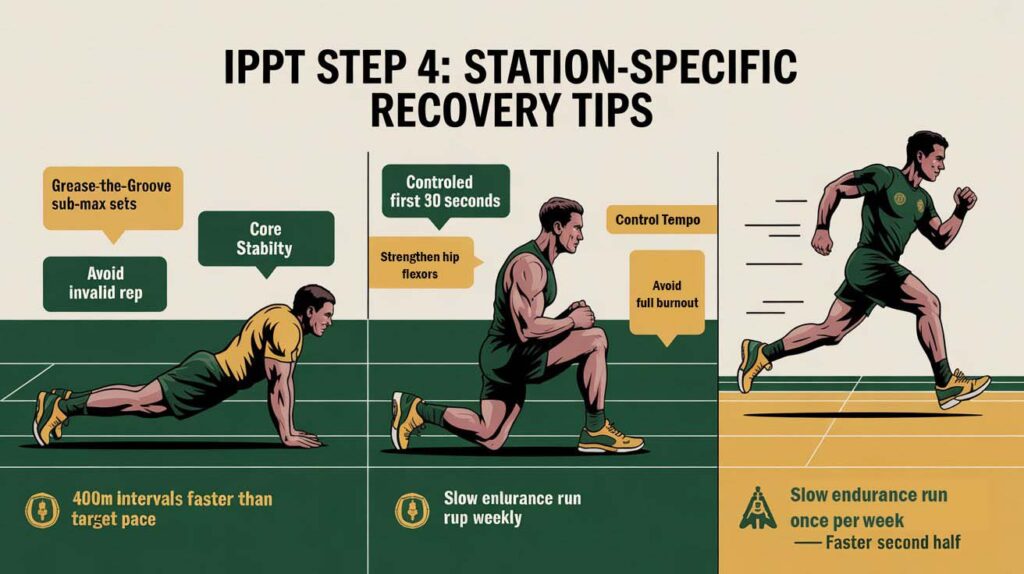
2.4km Run
If you struggle here, it’s usually pacing.
Try:
- 400m intervals slightly faster than target pace
- One slow endurance run weekly
- Learn negative splits (faster second half)
Most run failures come from going out too fast in the first 800m.
Step 5: Fix the Real Problem — Planning
From experience, failing IPPT isn’t about fitness alone.
It’s usually:
- Leaving training too late
- Only training 2 weeks before test
- Underestimating the run
Book your retest early enough to give yourself 6–8 weeks.
Treat it like a scheduled exam, not an afterthought.
Mindset After Failing
Failing feels personal. But it’s just data.
If you’re wondering how to bounce back after failing IPPT, the answer is structure — not last-minute panic training.
Your body responds quickly when trained properly. Within 6–8 weeks, you can add:
- 5–10 push-ups
- 5–10 sit-ups
- 30–60 seconds off your run
The system rewards consistency, not talent.
And once you pass comfortably once, the anxiety drops for future years. If you’re feeling anxious or overthinking your next attempt, read Stressing About Passing IPPT? I Was in the Same Place Once — it breaks down the mental side most NSmen don’t talk about.
Common Mistakes After Failing IPPT
- Training only 2 weeks before retest
- Ignoring the 2.4km run
- Over-training push-ups daily
- Retesting without simulation
- No clear rep target
Frequently Asked Questions After Failing IPPT
Yes. You can book another IPPT attempt within your current IPPT window if there are available slots. Just make sure you give yourself enough time to train properly before retaking it.
If you do not pass within your IPPT window, you will need to complete the required NS FIT sessions for that year.
Most NSmen need about 6 to 8 weeks of consistent training to see real improvement in push-ups, sit-ups, and the 2.4km run. Training for only 1–2 weeks is usually not enough.
For many NSmen, adding a few push-ups is usually faster than cutting a big amount of time from the 2.4km run. It depends on your current fitness level and which station is weaker.
The fastest way is to follow a structured plan. Train 3 to 4 times per week, focus on your weakest station, and track your reps and timing regularly instead of training randomly.
For a complete breakdown of IPPT windows, retest rules, NS FIT obligations, and penalties, refer to the full IPPT Fail Guide.
Final Thoughts
Failing IPPT once doesn’t define your fitness but how you respond does. The smartest NSmen don’t just train harder; they train strategically, track their reps, and use tools to plan their next score properly. If you approach your next attempt with structure instead of emotion, your comeback is very realistic.