If you’ve just started hearing the word “IPPT” everywhere, you’re not alone. It usually pops up when enlistment is around the corner. Suddenly friends are talking about 61 points. Parents are asking if you’ve trained. And you’re left wondering what this thing even is.
Let’s clear it up properly. No military jargon. No complicated explanations. Just a simple breakdown of what IPPT means, why Singapore uses it, and why people make such a big deal about it.
Why everyone talks about iPPT before nS?
When your enlistment letter arrives, you enter a new world of abbreviations. NS. BMT. PES. IPPT.
It feels like everyone expects you to understand these terms immediately.
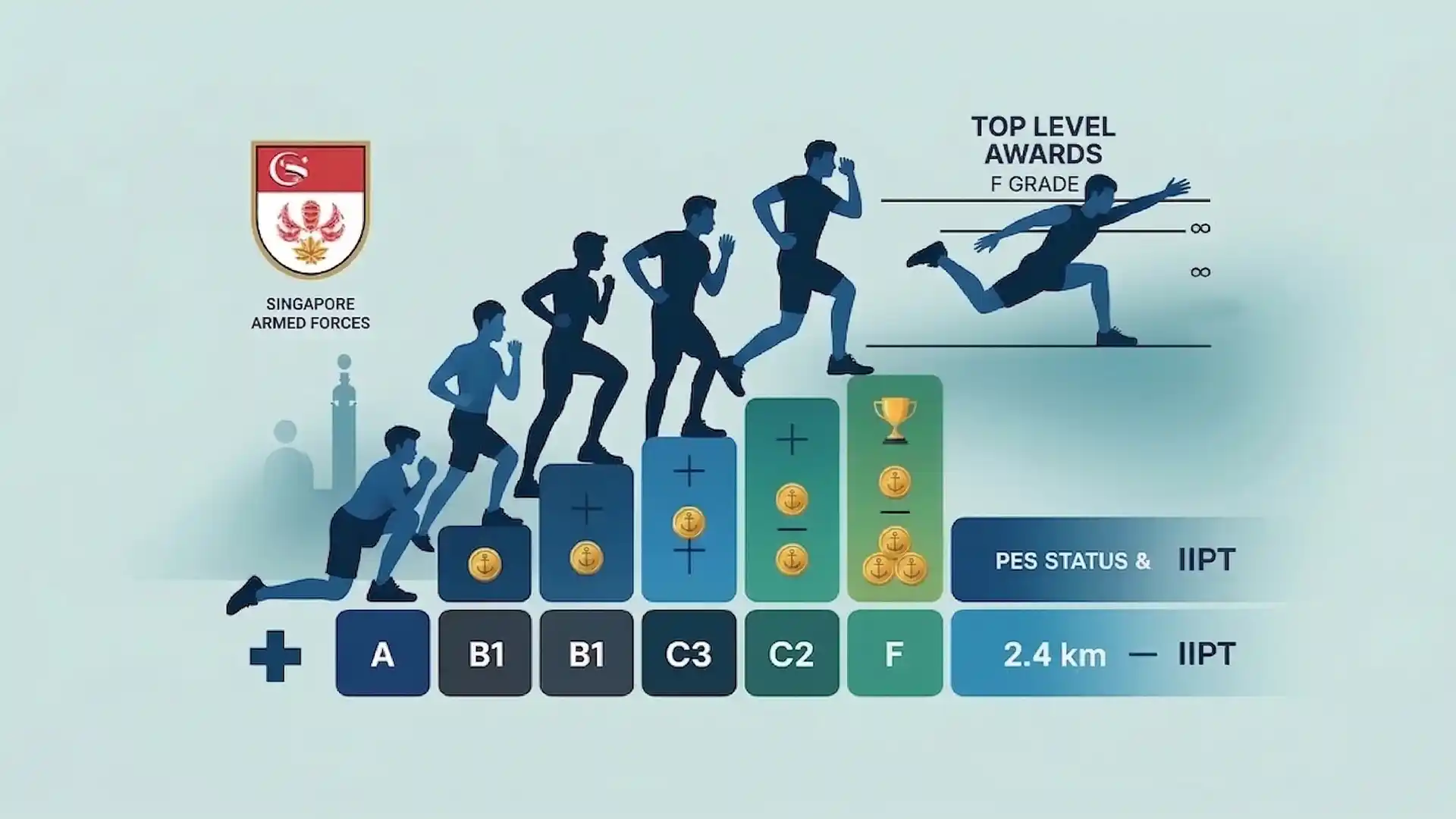
IPPT becomes a hot topic because it’s tied to fitness and, for some people, the chance to shorten training. That’s usually why you hear seniors saying, “Better train now” or “Try to hit 61 points.” If you are feeling overwhelmed by the expectations, it is common to find yourself stressing about passing IPPT, but understanding the requirements is the first step to staying calm.
But before worrying about points, you need to understand what IPPT actually stands for.
What Does IPPT Stand For?
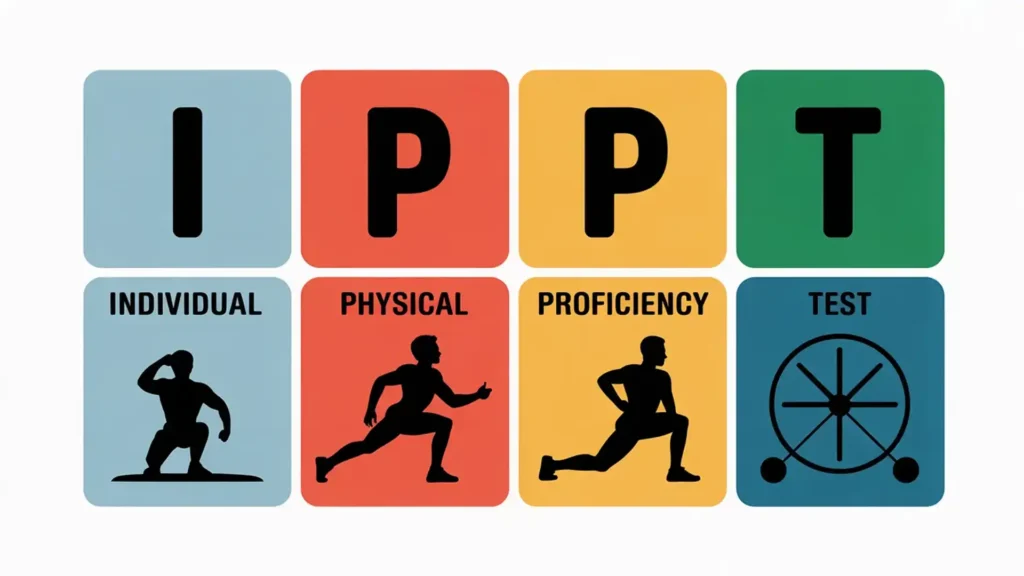
IPPT stands for Individual Physical Proficiency Test.
Let’s break that down:
- Individual – It measures you, not your team.
- Physical – It focuses on your body’s fitness.
- Proficiency – It checks how capable or competent you are physically.
- Test – It’s an assessment, not a punishment.
So in simple terms, IPPT is a fitness test used in Singapore to measure whether someone meets a certain physical standard.
That’s it. No hidden meaning.
What Is IPPT in Simple Terms?
Think of IPPT as a basic fitness checkpoint.
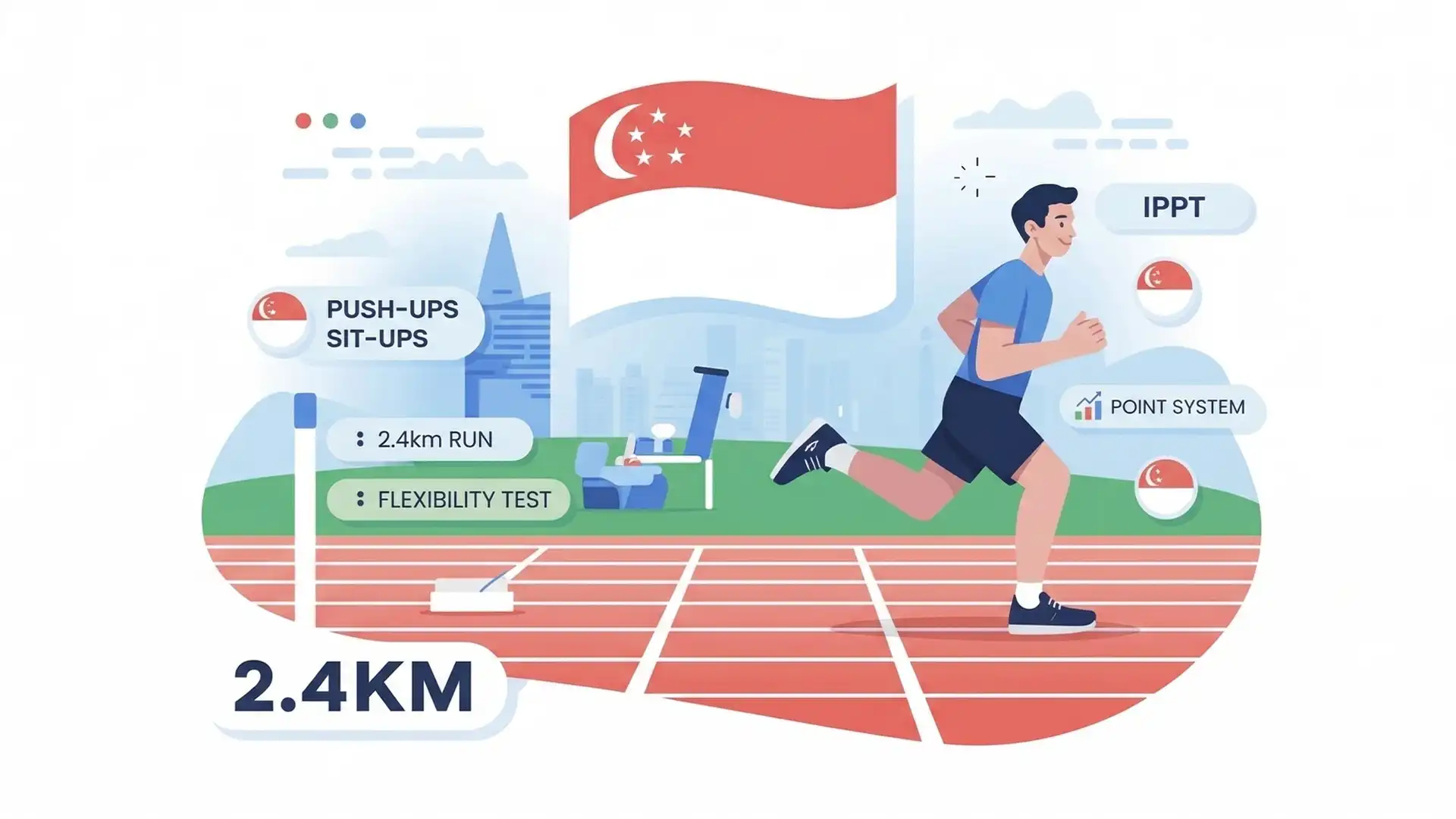
It measures three things:
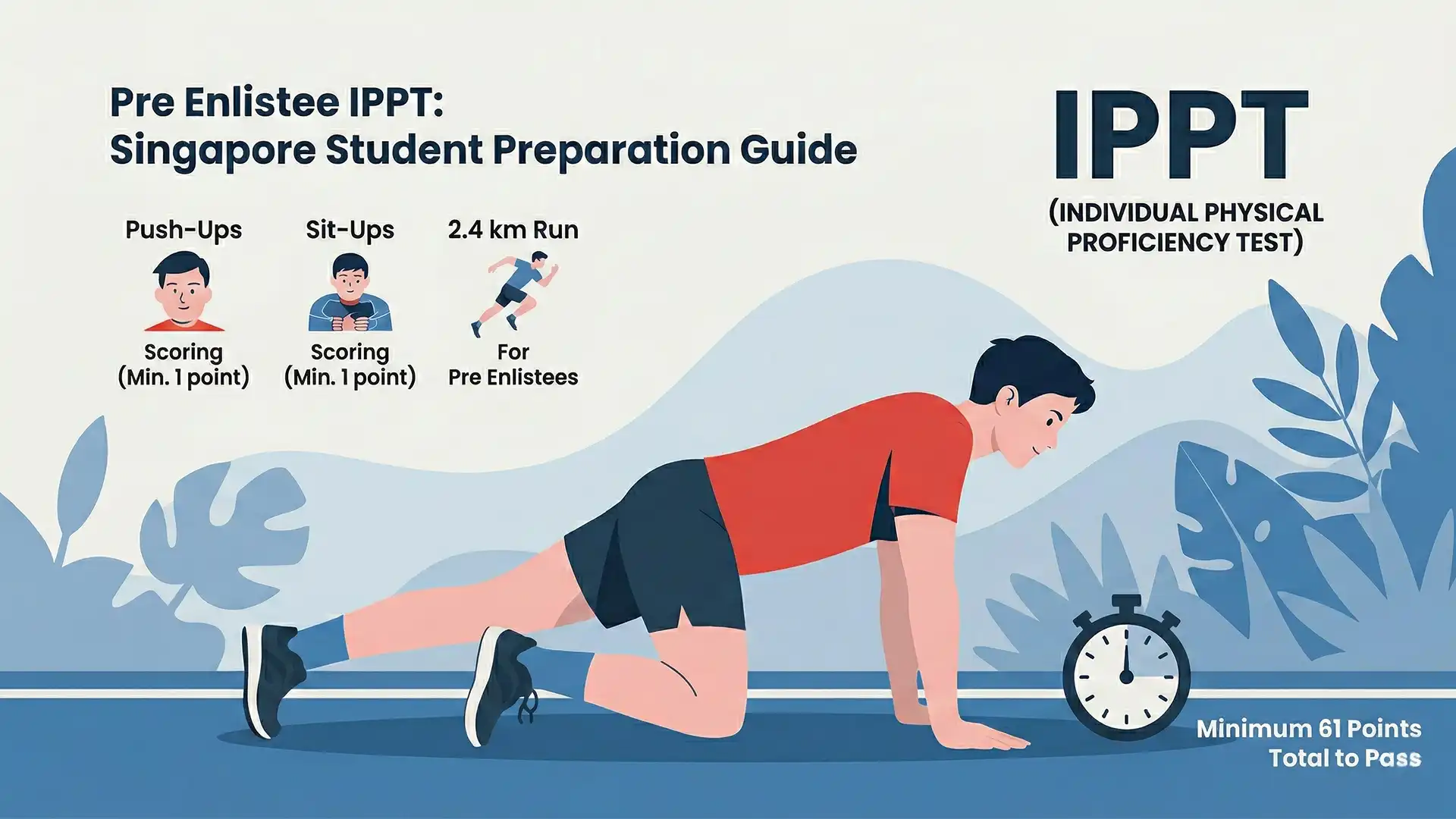
- How many push-ups you can do
- How many sit-ups you can complete
- How fast you can run 2.4 kilometres
You earn points for each station. The better you perform, the more points you get. If you want to see how your push-ups, sit-ups, and run timing convert into points, try using an IPPT score calculator to estimate your total score instantly.
It’s not designed to make you suffer. It’s designed to measure your overall fitness level in a structured and standardized way.
Why Does Singapore Use IPPT?
This is something most official pages don’t really explain.
Singapore uses IPPT because physical readiness matters in uniformed service. Whether someone is in the Army, Police, or Civil Defence, they need a minimum level of fitness.
But it’s not just about combat or field training.
IPPT also creates:
- A clear standard for everyone
- Accountability across units
- Motivation to stay active
- A measurable fitness benchmark
Instead of guessing whether someone is “fit enough,” IPPT gives a structured way to measure it.
When Does IPPT Happen in Your NS Journey?
Many people think IPPT is just something you do before enlistment. That’s not entirely true.
Before Enlistment
Some individuals take it before starting full-time NS. This is called pre-enlistee IPPT. If you want to understand that version specifically, you can read our guide on Pre Enlistee IPPT. If you want to understand that version specifically, you can read our guide on pre-enlistee IPPT 61 points to see how it affects your enlistment date.
During Full-Time Service
After enlistment, IPPT may still be conducted during your service period depending on your training phase. To ensure you stay eligible for awards and passes, you must maintain your IPPT eligibility throughout your active duty.
During Reservist Years
Even after completing full-time NS, IPPT continues during your Operationally Ready NS years. It becomes part of your annual requirement depending on your category.
So IPPT isn’t a one-time event. It follows different stages of your NS journey.
IPPT Across Your NS Journey
| Stage | Does IPPT Apply? | Why It Matters |
|---|---|---|
| Before Enlistment | Sometimes (Pre-enlistee) | May affect training duration |
| During Full-Time NS | Yes, depending on phase | Measures physical readiness |
| During Reservist Years | Yes, for eligible categories | Annual fitness requirement |
Who Needs to Take IPPT?
Not everyone is required to take IPPT in the same way.
Your requirement depends on factors like:
- Your medical classification
- Your service status
- Your NS phase
For example, your PES grading and service category determine whether IPPT applies to you and how often you need to attempt it.Instead of trying to piece things together from different people, it’s easier to look at the full explanation on our IPPT Eligibility page. We’ve broken it down clearly so you can see who actually needs to take IPPT and who doesn’t.
That way, you’re not just going by what a friend said or something you heard a few years ago that might not even apply anymore. Understanding the criteria for IPPT eligibility ensures you don’t miss a mandatory window or waste time training for a test you might be exempted from.
How Is IPPT Structured?
The structure is straightforward:
- Push-ups
- Sit-ups
- 2.4 kilometre run
Each station gives you points. Your total score determines whether you meet the required benchmark. You can use an NS IPPT calculator to check your expected score based on your current repetitions and run timing before attempting the test.
The scoring system varies slightly depending on age group and category. If you want to understand exactly how points are calculated and what different scores mean, refer to our detailed IPPT Scoring System guide.
This article focuses on meaning and purpose, not deep scoring breakdown.
Common Misunderstandings About IPPT
Let’s clear up a few myths.
“IPPT Is Only for the Army”
Not true. It applies across different uniformed services in Singapore.
“If I Fail Once, I’m in Trouble”
Failing once does not mean you are automatically punished. There are structured systems in place to help individuals improve and retake when necessary.
“Only Very Fit People Can Pass”
You do not need to be an athlete. IPPT measures basic functional fitness. With consistent preparation, most healthy individuals can meet the required standard.
“It Doesn’t Matter Before NS”
Understanding IPPT early helps you make smarter decisions. It reduces last-minute stress and allows you to prepare calmly instead of rushing.
Why Understanding IPPT Early Makes Things Easier
A lot of stress around NS comes from uncertainty.
When you don’t understand the terms, everything feels heavier than it actually is.
Once you know:
- What IPPT stands for
- What it measures
- Why it exists
- Whether you meet the current IPPT eligibility standards,
The whole situation feels more manageable.
You move from confusion to clarity.
Frequently asked questions (fAQs)
IPPT stands for Individual Physical Proficiency Test.
It depends on your eligibility category and service phase. Some individuals are required to take it, while others may be exempted.
If you’re reasonably active and not completely avoiding exercise, it’s honestly manageable with some preparation. You don’t need to be some super fit athlete or gym freak to pass.
No. It can apply before enlistment, during service, and during reservist years depending on your category.
61 points is a commonly discussed benchmark in certain pre-enlistment situations. The exact importance depends on your category and timing.
Conclusion
If you strip away all the abbreviations and noise, IPPT is really just a fitness test. That’s it. It’s not some secret military challenge designed to catch you off guard. It’s push-ups, sit-ups, and a run. Most of us have done some version of that in school before.
The stress usually comes from hearing everyone talk about it without fully understanding it. Once you know what the letters stand for and