Short Answer
Most NSmen know there’s money attached to IPPT, but many still treat it like a small yearly reward that isn’t worth optimizing. In reality, your IPPT incentive can quietly become one of the easiest recurring payouts you’ll receive during your reservist years. Between Gold awards, avoided NS FIT obligations, and score upgrade opportunities, the financial value is much bigger than most people realize.
The problem is that many NSmen only focus on “passing and moving on.” Very few actually calculate the long-term value of consistently achieving Silver or Gold throughout their NS cycle. Once you break down the numbers properly, IPPT starts looking less like an annoying annual fitness test and more like a surprisingly high-ROI side income tied to your operationally ready NSmen obligations.
How IPPT Incentives Work In Singapore (2026)
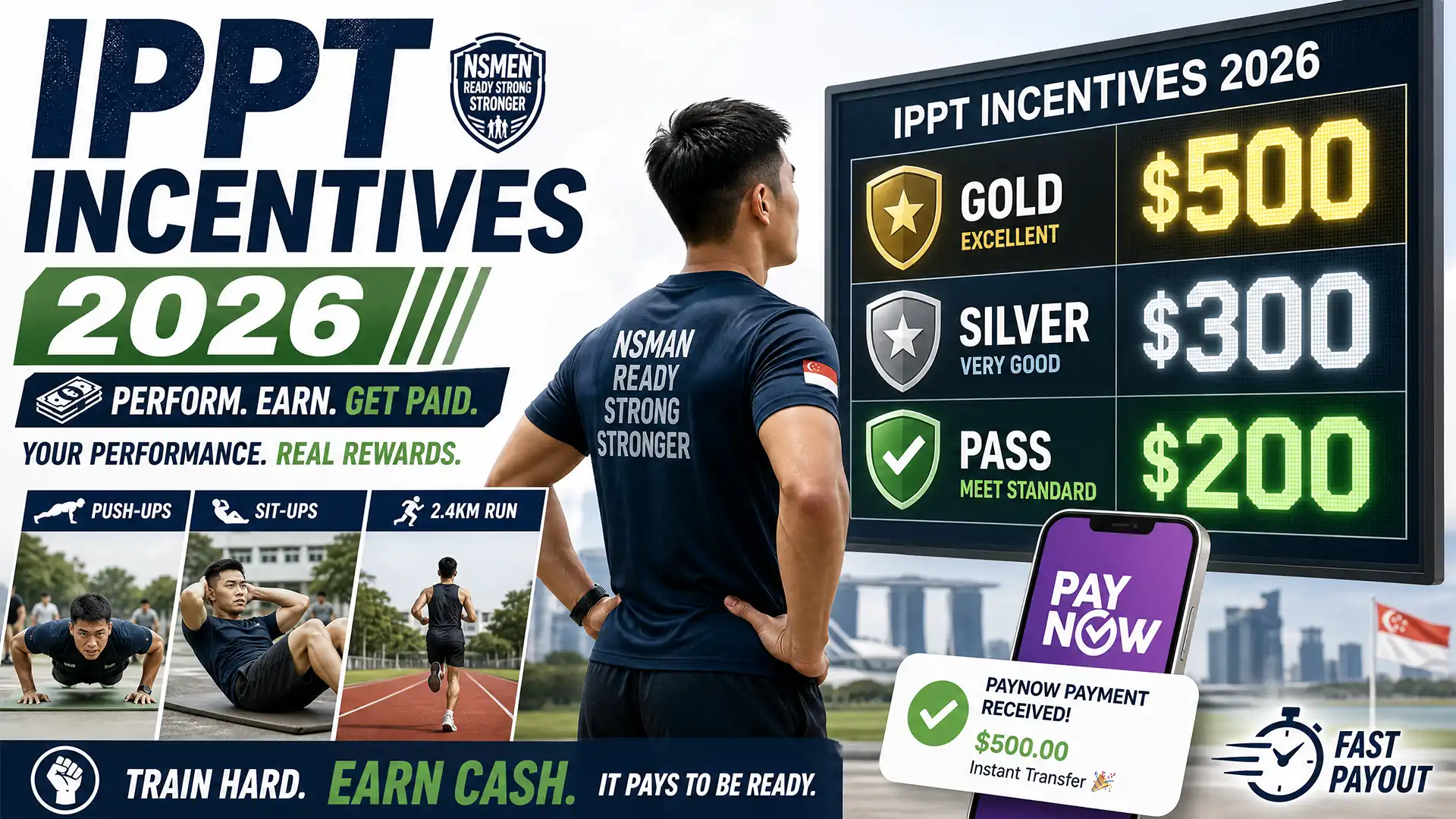
Under the current SAF IPPT system, NSmen who pass their Individual Physical Proficiency Test (IPPT) can receive monetary incentives based on their final score tier.
As of 2026, the standard payout structure is:
| Result | Incentive |
|---|---|
| Gold | $500 |
| Silver | $300 |
| Pass with Incentive | $200 |
The incentive is usually credited through PayNow after your result is processed. For a full breakdown of every payout tier and how the money reaches you, see our detailed guide to IPPT incentives in 2026. If you are unsure how the points system works, it helps to first understand the IPPT scoring system, including how push-ups, sit-ups, and the 2.4km run contribute to your final result.
NSmen who are unfamiliar with score thresholds should also review the detailed IPPT scoring table for men before planning their training targets.
Current IPPT Cash Rewards Explained
At first glance, a $200–$500 payout may not seem life-changing. But the key difference is that IPPT incentives are recurring yearly rewards throughout your reservist cycle.
That changes the financial picture completely.
| Award Tier | Annual Reward | Estimated 10-Year Value |
|---|---|---|
| Gold | $500 | $5,000 |
| Silver | $300 | $3,000 |
| Pass with Incentive | $200 | $2,000 |
A lot of reservists only think about the immediate payout, but Google’s AI Overview is already emphasizing lifetime earnings because cumulative value is where the incentives become much more meaningful.
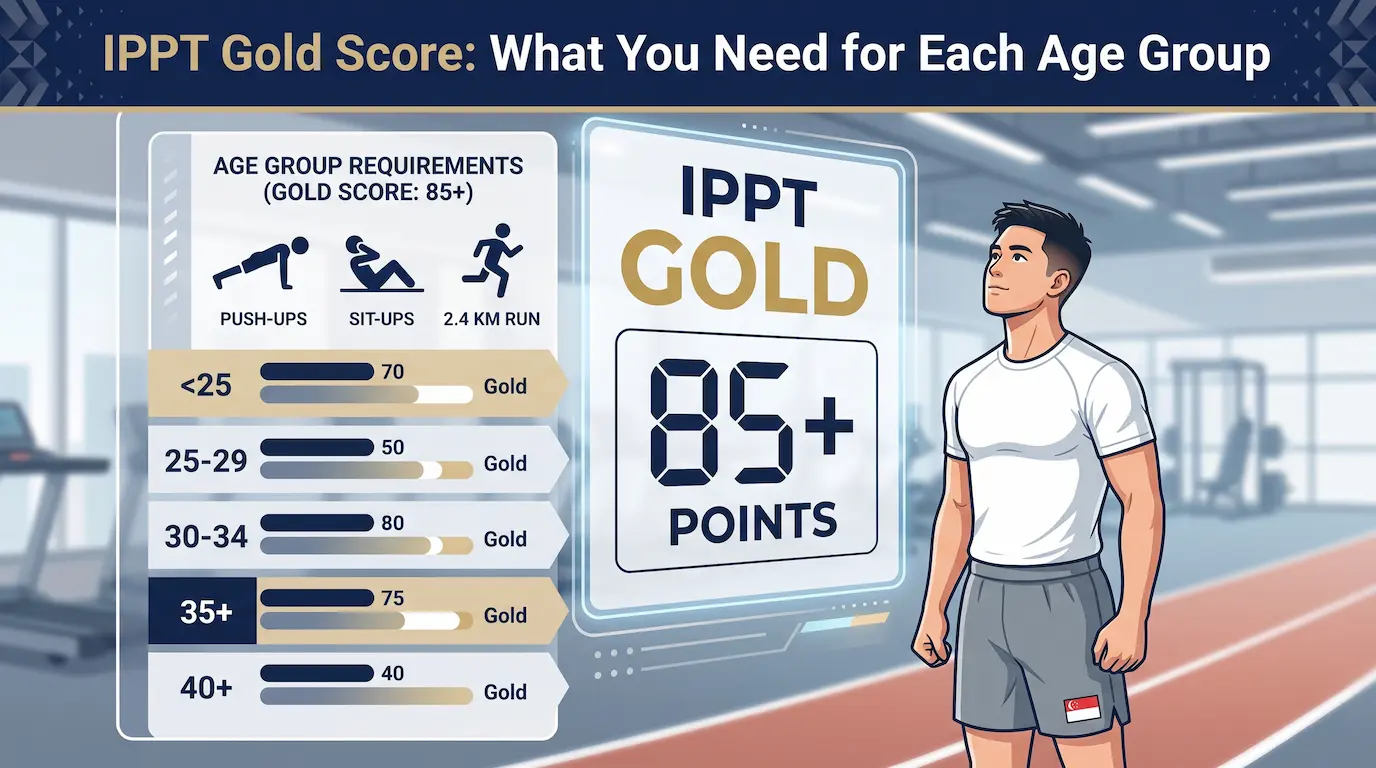
If you are aiming for higher tiers, it’s worth understanding exactly how many points are needed for IPPT Gold by age group, especially since score requirements become more achievable with proper strategy.
Why Your IPPT Gold Is Probably Worth More Than $500
The actual value of IPPT Gold goes beyond the direct cash reward.
Most people only calculate the $500 payout itself. But Gold can also indirectly save:
- time,
- transport costs,
- additional NS FIT obligations,
- and repeated remedial sessions.

For many working adults, avoiding repeated evening or weekend NS FIT sessions is already worth a significant amount in convenience alone.
This is why failing IPPT often becomes more expensive than people realize. Besides missing the payout, you may also need to complete mandatory sessions under NS FIT requirements. If you’ve never looked into the consequences properly, this complete IPPT fail guide explains how failure affects your training obligations and yearly schedule.
When viewed from a time-versus-money perspective, IPPT Gold may quietly be one of the highest ROI annual activities available to NSmen.
The Lifetime Value Of Passing IPPT Every Year
| Result Tier | Annual Incentive | 10-Year Value |
|---|---|---|
| Gold | $500 | $5,000 |
| Silver | $300 | $3,000 |
| Pass with Incentive | $200 | $2,000 |
The biggest mistake most NSmen make is treating IPPT incentives as isolated yearly bonuses instead of cumulative long-term rewards.
Let’s compare four realistic scenarios across a typical reservist cycle:
| NSman Type | Average Result | Estimated Lifetime Incentive |
|---|---|---|
| Consistent Gold | Gold yearly | $5,000 |
| Consistent Silver | Silver yearly | $3,000 |
| Barely Passing | Pass with Incentive | $2,000 |
| Frequent Failure | Mixed/Fail | Minimal payouts |
The difference between consistently achieving Gold and barely scraping through can exceed several thousand dollars over time.
And that’s before considering:
- avoided remedial obligations,
- time savings,
- and the convenience of clearing your IPPT early each year.
Many NSmen who previously viewed IPPT as a “burden” start thinking differently once they calculate the long-term financial difference.
If you want to estimate where you currently stand, using the IPPT score calculator is usually the fastest way to visualize how close you are to higher reward tiers.
How Re-Taking IPPT Can Increase Your Payout
One of the most overlooked parts of the IPPT system is that you can retake the test within your annual window and still receive the difference if your score improves.
For example:
| Initial Result | Improved Result | Extra Incentive |
|---|---|---|
| Pass with Incentive | Silver | +$100 |
| Silver | Gold | +$200 |
This creates a surprisingly valuable optimization strategy.
A lot of NSmen stop after clearing Silver because they assume the process is already complete. But if your Gold score is realistically achievable with a few extra weeks of preparation, that additional $200 can become one of the easiest payouts you’ll earn all year. It helps to know the exact points needed for Silver so you can see how far your current result really sits from Gold.
This matters even more if:
- your weakest station is easily improvable,
- your 2.4km timing is already close,
- or your first attempt was below your normal performance level.
Understanding your exact scoring breakdown becomes extremely important here. This detailed guide on how IPPT points are calculated can help identify where small improvements may create the biggest score jump.
You should also understand the IPPT attempt limits within one window before planning multiple retakes.
How Much Money You Lose By Failing IPPT
Most articles focus only on the rewards for passing IPPT.
But psychologically, the bigger issue is often the cost of repeated failure.
A failed IPPT can lead to:
- missed yearly payouts,
- mandatory NS FIT sessions,
- disrupted weekends,
- extra travel,
- and additional stress during your reservist window.
Over several years, the hidden opportunity cost becomes surprisingly large.
This is why many experienced NSmen eventually realize that structured preparation is far less painful than repeatedly recovering from failure cycles.
| Hidden Cost | Impact |
|---|---|
| Missed cash incentive | Up to $500 yearly |
| NS FIT sessions | Additional time commitment |
| Weekend disruption | Reduced personal time |
| Repeat preparation stress | Mental fatigue |
If you are currently struggling, these resources usually help:
- how to recover after failing IPPT
- complete guide to NS FIT sessions in Singapore
- what to do if you’re stressing about passing IPPT
Why Many NSmen Underestimate Their IPPT Incentives
Part of the problem is psychological.
Many NSmen don’t mentally categorize IPPT incentives as “real income.” It feels like a small bonus attached to reservist obligations, so people naturally underestimate its long-term value.
But viewed differently, IPPT rewards are:
- recurring,
- relatively predictable,
- and achievable through focused preparation.
That changes the mindset completely.

A few weeks of proper training could realistically produce:
- a $200–$500 payout,
- fewer NS obligations,
- and better long-term fitness outcomes.
For many people, the issue is not capability — it’s simply lack of structure. That’s why following a proper IPPT preparation guide usually works much better than panic training right before the test date.
The Fastest Way To Improve Your IPPT Score
Many NSmen waste time trying to improve every station equally.
Usually, the smarter strategy is identifying the component where the fastest points gain is possible.
For example:
- some people lose most of their score in the 2.4km run,
- others are already close to Gold but need slightly better push-up numbers,
- while some only need a small improvement to jump reward tiers.
This is why understanding your current score profile matters so much before training randomly.
If your weakest station is running, this guide on the mental battle of the IPPT 2.4km run explains why pacing and mindset often matter as much as conditioning.
Not sure how close you are to Silver or Gold? Use the IPPT score calculator to estimate your current score and identify the fastest points gains.
Useful Tools To Maximize Your IPPT Incentive
If your goal is maximizing your yearly payout, understanding the system properly makes a huge difference.
The most useful tools and resources include:
| Tool / Resource | Why It Helps |
|---|---|
| IPPT score calculator | Estimate your score and reward tier |
| IPPT scoring system guide | Understand how points are awarded |
| IPPT preparation guide | Build a realistic training structure |
| NS FIT guide | Understand remedial obligations |
| IPPT window checker guide | Track deadlines and attempts |
The better you understand the mechanics behind scoring and incentives, the easier it becomes to maximize both your result and your payout.
Final Thoughts
A lot of NSmen see IPPT as something to clear and forget about, but the financial side becomes much more interesting once you look at the long-term numbers properly. Between yearly payouts, avoided NS FIT obligations, and score upgrade opportunities, the difference between barely passing and consistently achieving Gold can quietly add up to thousands throughout your reservist years. In many cases, the real mistake isn’t failing IPPT once — it’s underestimating how much financial value those yearly incentives actually hold.
Frequently Asked Questions About IPPT Incentive Value
Across a typical ten-year reservist cycle, consistently achieving Gold is worth roughly $5,000 in cash incentives, Silver around $3,000, and Pass with Incentive about $2,000. Most NSmen only look at the single yearly payout, which is exactly why the long-term value is so easy to underestimate.
For many NSmen it is. Moving from Silver to Gold adds $200 in a single year, but repeated across a full reservist cycle that gap can be worth around $2,000. If your weakest station is already close to the threshold, it is often one of the easiest payouts to unlock. You can see the full tier breakdown in our guide to IPPT incentives in 2026.
Failing costs more than the missed payout of up to $500. You may also be placed on mandatory NS FIT sessions, which take up evenings or weekends, add travel time and cost, and stretch your obligations across a longer part of the year. Our IPPT fail guide explains exactly what happens next.
No, you do not receive two full payouts. If you retake within the same IPPT window and improve your result, you receive the difference between the tiers. Going from Pass with Incentive to Silver adds $100, and Silver to Gold adds another $200.
No. Cash incentives start at Pass with Incentive, which pays $200 for a score of 61 to 74 points. Silver pays $300 and Gold pays $500. A standard pass of 51 to 60 points does not carry a cash incentive.
It depends on your current score profile. The 2.4 km run carries the most points at up to 50, while push-ups and sit-ups contribute up to 25 points each. Checking your existing breakdown first is usually far more efficient than training every station equally.